
Cameras, radar, and LiDAR give modern vehicles a clear view of the road—as long as nothing blocks their line of sight. Yet in real traffic, critical hazards often become audible before they become visible. Al mismo tiempo, strong road-noise insulation in modern electric vehicles makes it harder for drivers to notice external warning sounds early, while autonomous vehicles have no human driver onboard to listen at all.
By integrating automotive exterior microphone modules, vehicles gain an acoustic perception layer that complements optical sensors—focusing on blind-spot hazard detection and exterior voice interaction.
1. Blind-Spot Siren and Hazard Detection
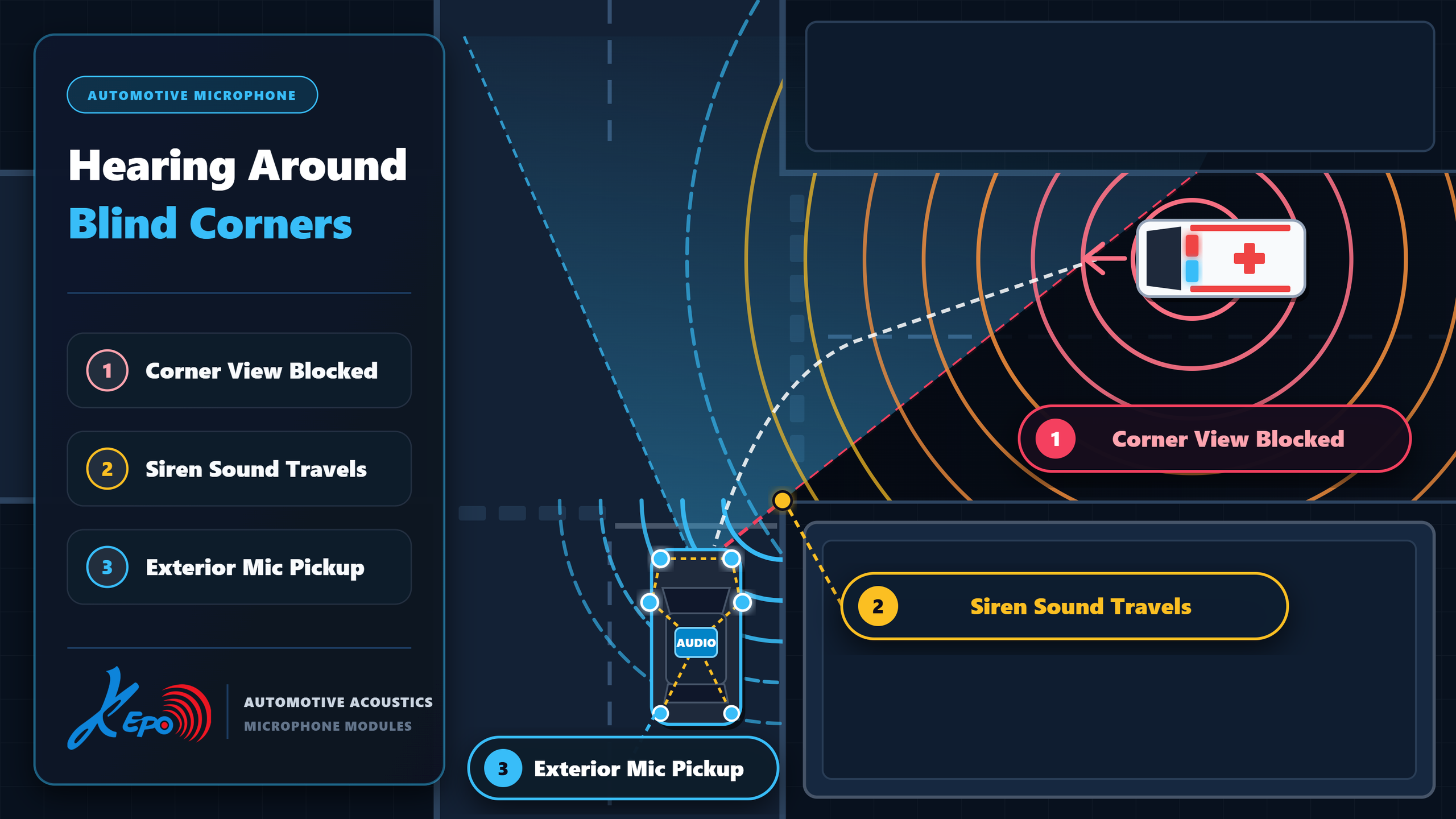
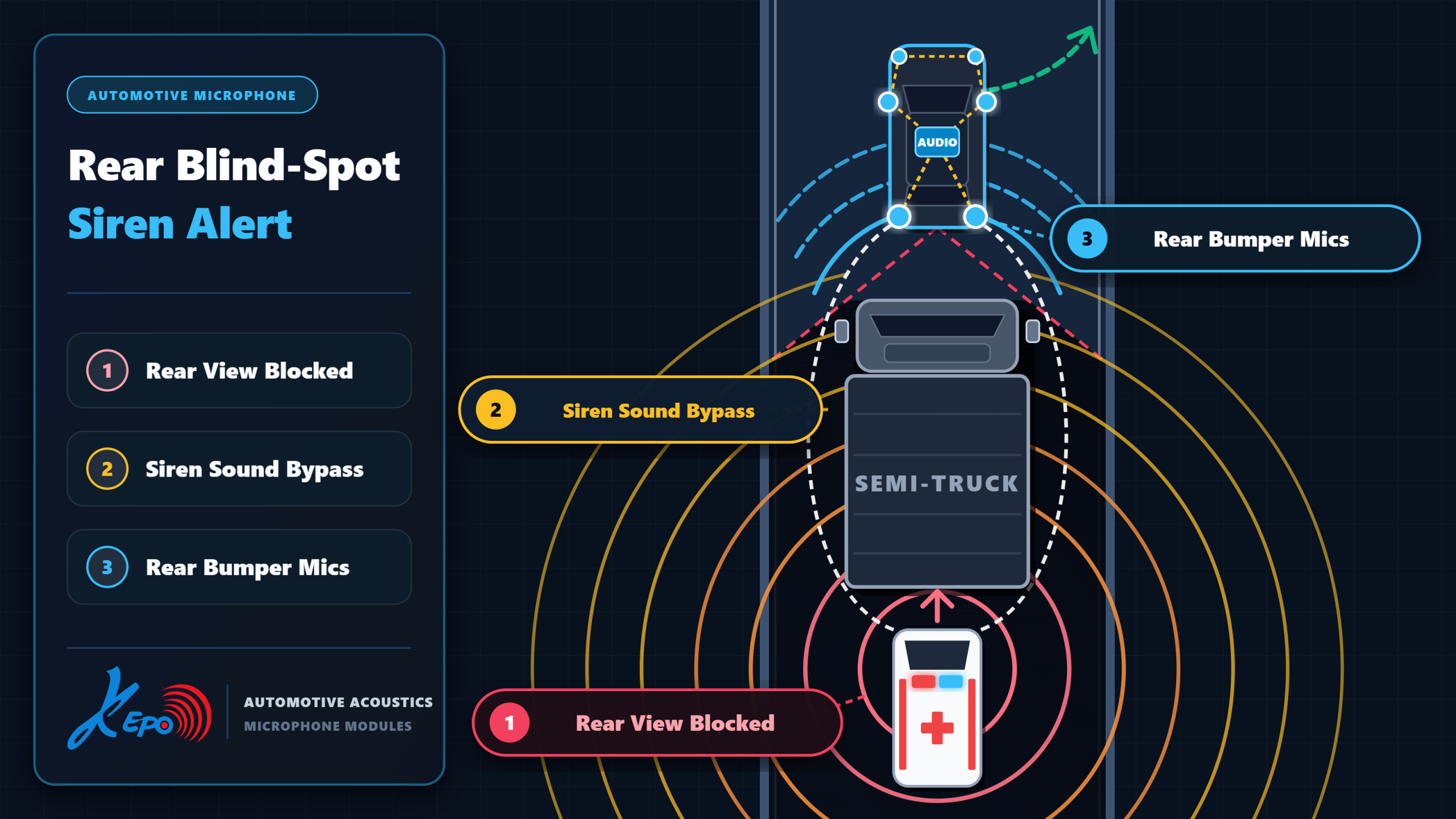
Optical sensors cannot see through obstacles, whereas sound waves travel around them without requiring a clear line of sight. By placing exterior microphone modules on the bumpers, side mirrors, or rear of the vehicle, the system can detect approaching ambulance, fire truck, or police sirens and estimate their direction—whether an emergency vehicle is around a blind urban corner or approaching from behind on a highway when the rear view is obstructed.
When a siren is detected, the vehicle can automatically lower cabin media volume and alert the driver, or signal an autonomous driving system to move aside and make way.
2. Weatherproof Exterior Voice Interaction
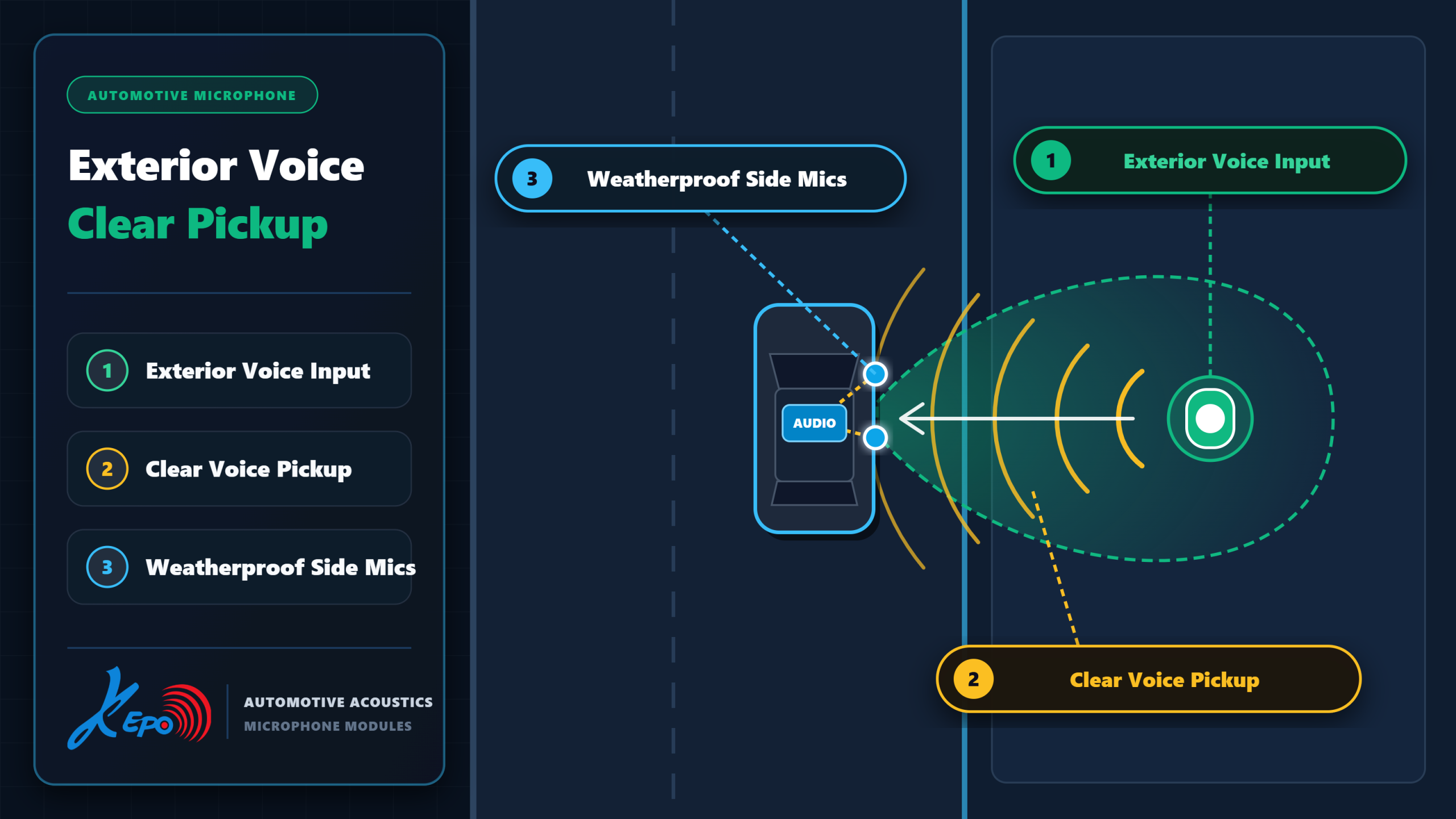
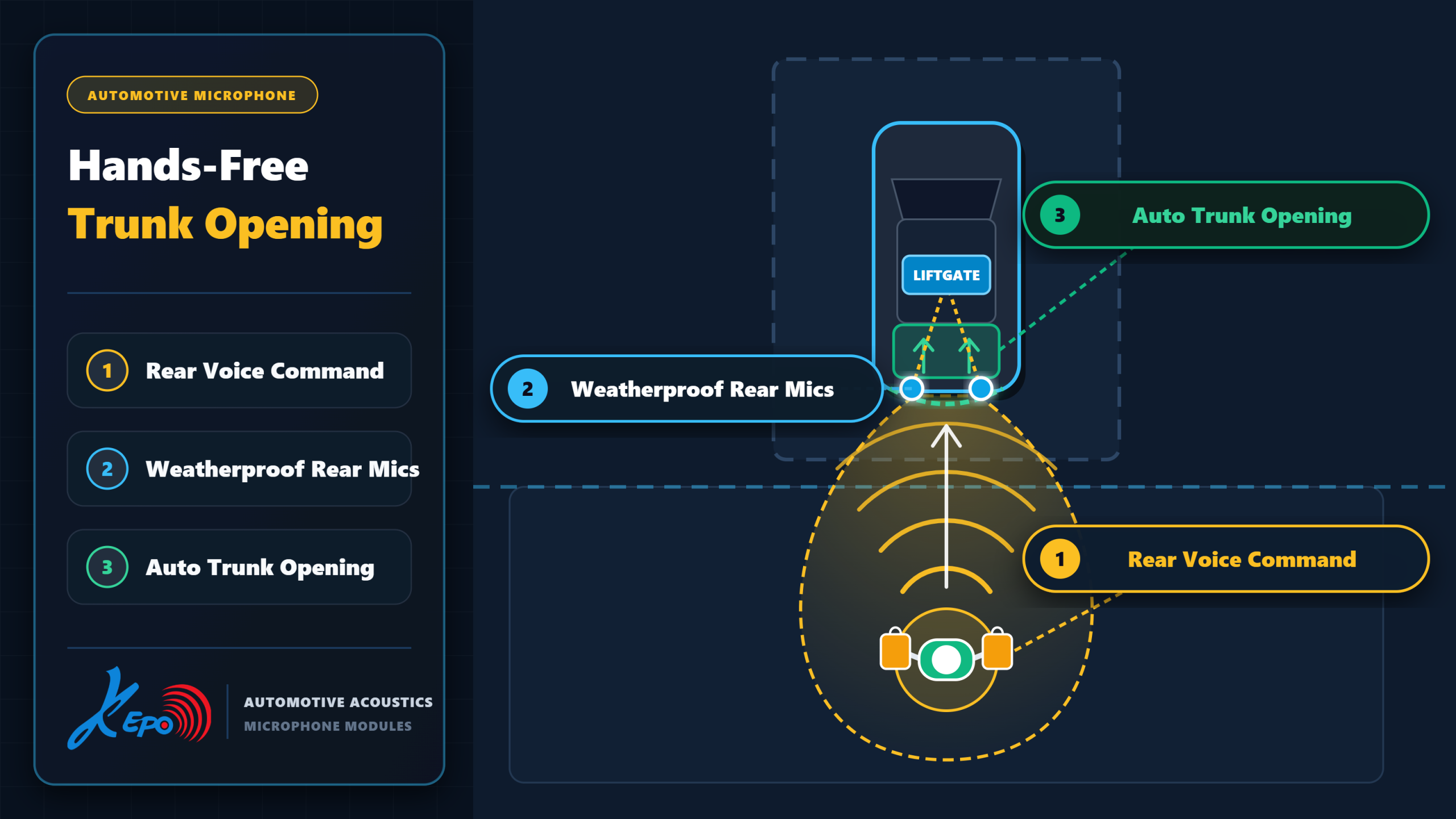
Exterior microphones also extend human-machine interaction outside the cabin. Integrated discreetly into the vehicle exterior—such as the sides and rear—high-SNR microphone modules capture clear voice input and ambient audio outdoors. This enables voice-based door opening, exterior emergency calls, and teleoperation audio monitoring around the vehicle, as well as trunk opening via rear voice commands.
What Matters in Exterior Hardware & Series Production
Unlike interior cabin microphones, exterior modules are exposed to water, dust, dirt, snow, road salt, freezing temperatures, heat, and car washes. Reliable series production requires solid hardware execution:
Weatherproof Housing & Wind Protection
Weatherproof housings with protected sound ports, wind shields, and connector gaskets that block water and dust while preserving clear airborne sound pickup.
Flexible Architecture & Wiring Integration
Compatibility with both analog and digital architectures—such as A2B daisy-chained twisted-pair networks that simplify multi-microphone wiring and reduce weight.
Tight Sensitivity & Phase Tolerances
Narrow sensitivity and phase tolerances across modules to support accurate sound localization and beamforming across microphone arrays.
As acoustic sensing moves from the cabin to the vehicle exterior, kepo technologies supports OEMs and Tier-1 suppliers with custom microphone module development, A2B array integration, and series production.
Contact Our Team →