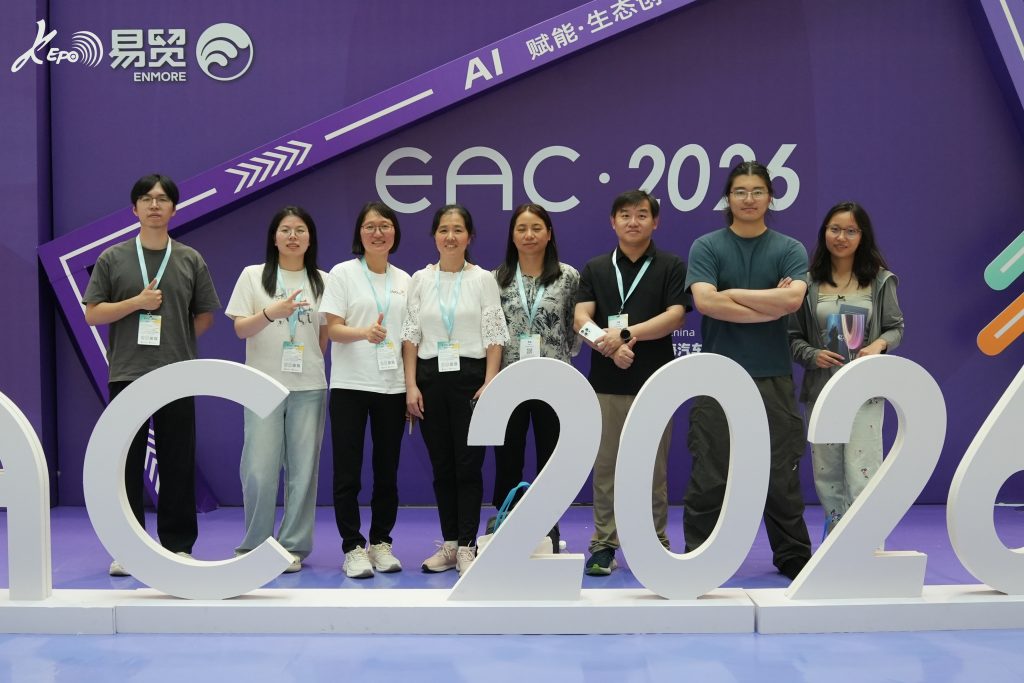
On May 28–29, 2026, KEPO attended the EAC (Enmore Auto Conference) at the Shanghai Automobile Exhibition Center. As a key industry platform for automotive interiors, exteriors and the smart cockpit, this year’s conference brought together hundreds of supply-chain companies and tens of thousands of professional visitors. Walking through the interior, exterior and cockpit halls, the KEPO team arrived at a clear judgment about where the smart cockpit is heading: the seat is evolving from a traditional load-bearing component into the most central experience-execution terminal in the smart cockpit.
This judgment stems from three forces unfolding at the same time:
First, the smart cockpit is redefining how people and vehicles interact. The cabin is no longer merely a physical space for driving, but an interface where information and experience are continuously exchanged between the occupant and the vehicle. The point of interaction is expanding from a single center screen to every perceivable surface of the cabin.
Second, autonomous driving is reshaping the spatial form of the cabin. As the driving task is progressively taken over, the spatial logic of the cabin loosens — the orientation, posture and function of the seat are no longer organized around “control,” but rearranged around “occupant experience.”
Third, sensor fusion is giving vehicles the ability to understand their users. Vehicles are beginning to perceive the state, position and intent of occupants, giving the cabin the precondition to “actively respond to people.”
The seat sits precisely at the intersection of these three forces.
It is the component with which the occupant has the largest contact area and the longest contact time. As interaction expands, space is reconstructed, and the vehicle comes to understand people, the seat ceases to be merely “a place to sit” and becomes an experience-execution terminal that carries feedback, transmits experience and responds to the user. Its role is shifting from passive support to active experience output.
This is exactly the direction KEPO followed in developing the 4D Exciter. As an experience unit designed for seat integration, the 4D Exciter aims to turn the seat into a channel for “perceivable feedback” — bringing haptic feedback and immersive experience directly to the contact surface between occupant and seat, transforming the seat from a static support structure into an active link in the cabin experience chain.
Specifically, the 4D Exciter turns the seat into an active experience-execution terminal through four functions:
- Music Rhythm: Equipped with a rhythm recognition algorithm, it achieves millisecond-level synchronization between vibration and melody, creating a perfect harmony of the auditory and tactile senses.
- Safety Alert: Communicates different safety warnings, like blind spot alerts and lane departure warnings, through distinct vibration patterns. Enhances the driver’s awareness and judgment of potential risks.
- Game Feedback: Integrates with in-car gaming scenarios, triggering vibration feedback based on in-game events such as collisions or shooting. Creates an immersive, interactive haptic gaming experience.
- Seat Massage: Combines traditional Chinese medicine principles and ergonomic design to provide effective muscle massage through vibration, improving overall cabin comfort.
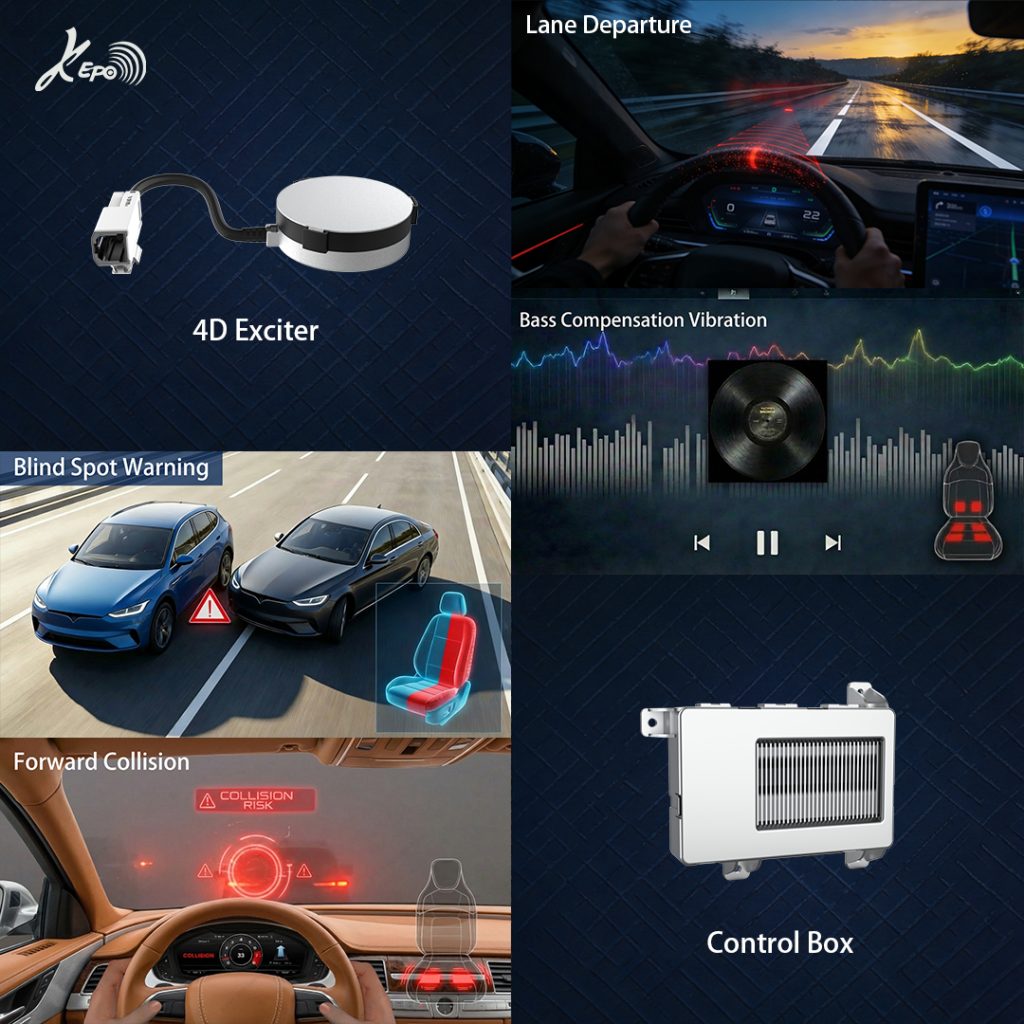
From entertainment to safety, from interaction to wellness, these four functions point in the same direction — a seat that no longer passively supports, but actively responds to every need of the occupant.
KEPO will carry this thinking to the upcoming Automotive Interiors Expo in Stuttgart. There, at Booth 3118, KEPO will showcase its experience solutions for the smart cockpit and welcomes industry partners to visit and exchange ideas.