
KEPO AVAS
KEPO's Carefully Designed
Smart AVAS Solution,
Tailored for Your EV Program.
AVAS sound should make quiet vehicles clearly perceptible at low speeds while remaining controlled within the wider urban acoustic environment.
The Context
When safety sound becomes part of the noise question
Vehicle detectability and acoustic impact are being considered together within the wider urban acoustic environment.
Traffic noise is moving higher on the urban agenda.
In February 2026, the TRUE Initiative identified traffic noise as a growing issue for cities worldwide and placed electric-vehicle warning sound within the wider urban acoustic environment.
Safety sound should not become urban noise.
UNECE work on UN R138 addresses both the detectability of quiet vehicles and the need to prevent AVAS from becoming excessively loud. A European Commission proposal also calls for unnecessary sound to be avoided.
The question is no longer simply whether an EV should make a sound.
It is how that sound can deliver the right information, to the right people, with a controlled acoustic impact.
Four Considerations
What does better AVAS sound need to achieve?

Be heard without adding unnecessary noise
UN R138 sets both minimum audibility requirements and maximum sound limits. Effective AVAS sound is not simply louder; it is clear within the required operating and acoustic boundaries.

Protect the people who rely on sound
For blind and low-vision pedestrians, vehicle sound is not background noise. It is road information. At low speeds, AVAS helps restore an audible cue that quiet vehicles may otherwise lack.

Make vehicle movement understandable.
Different vehicle states need clear alert cues. Forward movement, reversing and slowing down each create different safety needs. A clear relationship between sound and vehicle behavior helps road users interpret more than presence alone.
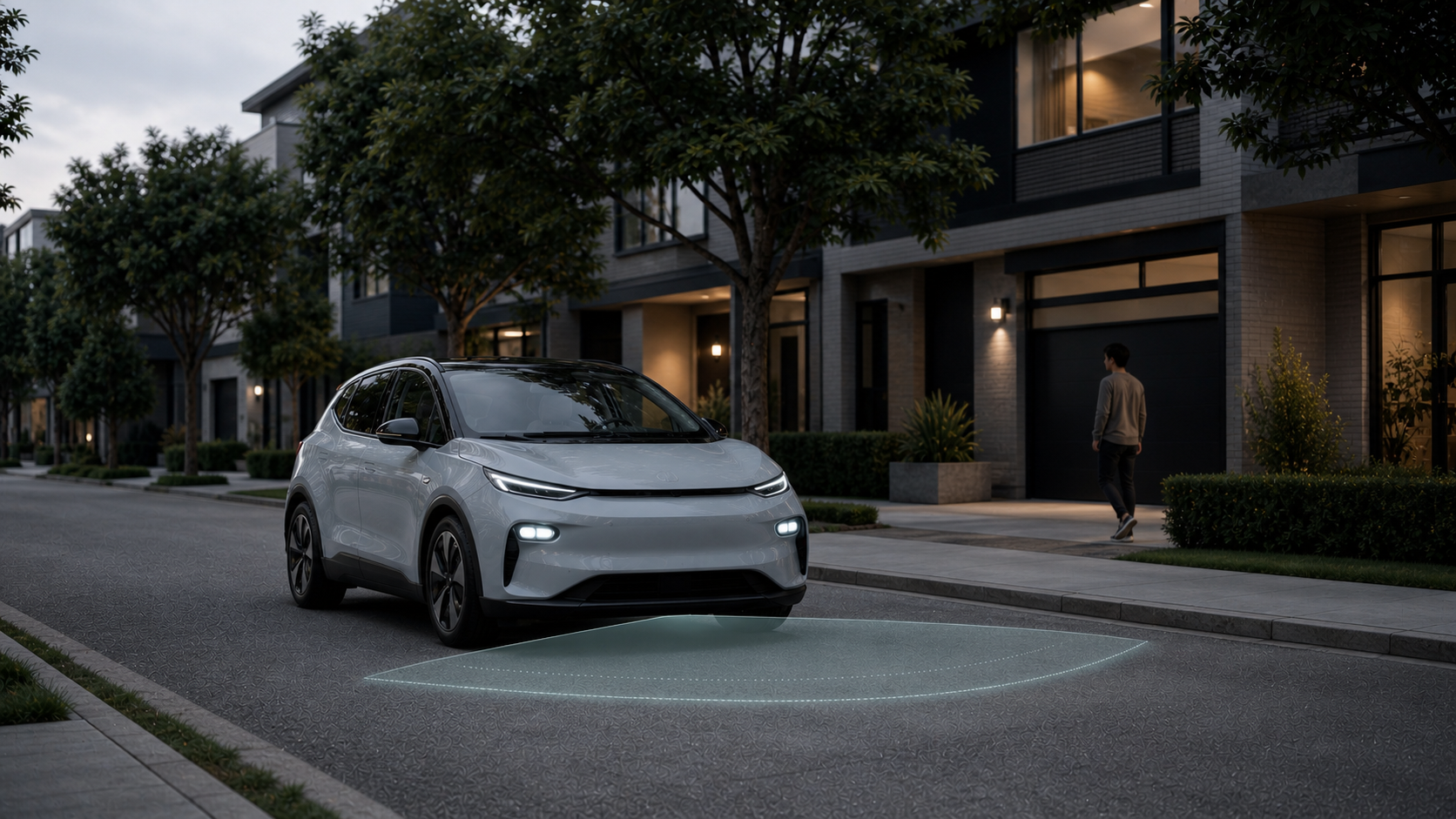
Reach the places where sound matters
Research is exploring object tracking, loudspeaker arrays and steerable sound fields as a way to direct warnings more precisely toward road users who need them, while reducing sound exposure elsewhere.
KEPO Approach
Turning these principles into an AVAS solution
These considerations become meaningful only when they are translated into system configuration, sound strategy and measurable performance on the target vehicle. KEPO supports AVAS development around the target market, vehicle platform and real operating scenarios.
Plan within safety and acoustic boundaries
KEPO develops system configurations and sound strategies around UN R138, FMVSS 141 and other applicable target-market requirements, creating a clear basis for vehicle integration and validation.
Design for real operating scenarios
Sound logic is planned around low-speed forward movement, reversing and other relevant vehicle states, keeping each warning connected to an actual safety need.
Make sound reflect vehicle behavior
KEPO develops and tunes AVAS sound according to the warning purpose, target market, vehicle type and intended brand character, with sound behavior responding clearly to vehicle speed and direction.
Translate strategy into vehicle performance
KEPO provides AVAS control units, external speakers and vehicle-signal integration support, and works with customers on system integration, sound tuning and vehicle-level testing for clear, consistent and measurable performance.
Trusted In Production
Already shipping in
vehicle programs today.
Cabin sensory components — speakers, microphones, AVAS, 4D exciters and ambient lighting.










Get in Touch
Make every AVAS sound purposeful, controlled and compliant.
Share your target vehicle, market and sound requirements with our team.
Send an inquiry