Advancements in 3D Sensing Technology: Unraveling the Magic of Structured Light, Time-of-Flight, and LiDAR

This blog explores the transformative realm of 3D sensing technology, presenting an overview of three key methodologies: Structured Light, Time-of-Flight (ToF), and LiDAR.
3d Camera 20230806

3D sensing technology has revolutionized various industries, enabling a deeper understanding and interaction with the world around us. In this blog, we’ll explore three prominent 3D sensing techniques – Structured Light, Time-of-Flight (ToF), and LiDAR.

Structured Light

Structured Light is a powerful 3D sensing method that employs projected light patterns to reconstruct the shape and texture of objects. A projector emits a structured pattern onto the target object, and a camera captures the deformed pattern. By analyzing the pattern deformation, the system can calculate the object’s depth information.

Time-of-Flight (ToF)

ToF technology measures the time taken for light or laser pulses to travel from the sensor to the object and back. This enables ToF sensors to calculate the distance to the object and create a 3D depth map. ToF technology is particularly suitable for real-time depth sensing in close and mid-range applications.

LiDAR (Light Detection and Ranging)

LiDAR is an active sensing technique that uses laser pulses to measure distances to objects. By measuring the time taken for the laser to return after hitting a surface, LiDAR can generate detailed 3D maps of the environment.

The evolution of 3D sensing technology has unlocked new possibilities in countless industries. Structured Light, Time-of-Flight, and LiDAR have each played a crucial role in enabling 3D perception and depth sensing. As technology continues to advance, the future of 3D sensing holds even more exciting possibilities for the world of innovation.
Share:

More Posts

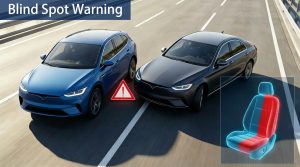
Safety Alert

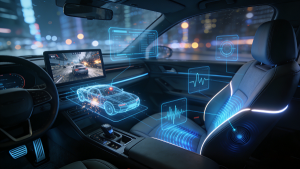
KEPO 4D Exciter II: Seat Haptic Feedback for Smart Cockpit Interaction

KEPO 4D Exciter II is a seat-integrated haptic feedback system for smart cockpit and automotive seating applications. It uses vibration units built into the seat structure and software-defined haptic patterns to let occupants feel selected vehicle, entertainment, comfort, and safety-related information through the seat.

Ambient Light (3)

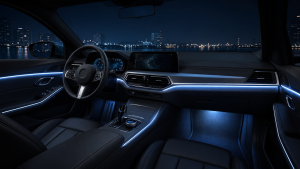
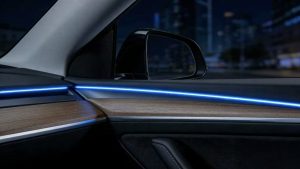
Analysis of the Three Lighting Methods for Automotive Ambient Lighting

Inside a car, you can often observe different qualities of light: some rays are sharp and clear, others soft and even, and some seem to emanate from within the vehicle itself. The reason behind this lies in the different lighting methods of ambient lighting—direct, indirect (reflective), and transmitted lighting.

ChatGPT Image 2026年5月13日 10 56 22 (1)

Two Work Stations on the Vehicle Exterior: Puddle Lamp and Logo Lamp in Series Production

Over the past decade, exterior lighting on production vehicles has expanded from a single function — nighttime visibility — into a set of distinct work stations. Two of them, the Puddle Lamp at the door-exit zone and the Logo Lamp on the body, have moved from luxury-segment differentiation toward mid-to-high-end electric platforms. KEPO has series-production programs in both product lines.

Contact Directly By Email

Need any solutions or help, please contact [email protected] directly.

We will respond within 12 hours. Please pay attention to the email with the suffix “@kepotech.com”.