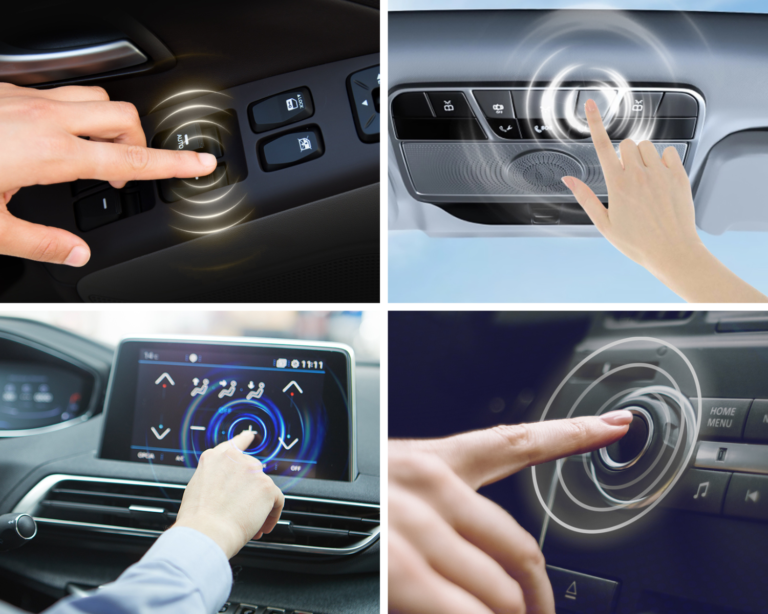
With continuous technological advancements and the advent of the intelligent era, touch technology has been widely applied across various fields, including the automotive industry. Touch modules, as the core components of in-vehicle human-machine interaction systems, provide drivers and passengers with more convenient and intuitive ways of operation. In this blog, we will explore how Kepo touch modules innovate and enhance the modern automotive driving experience through better interaction.
Haptic exciters are primarily used to provide physical feedback, allowing users to feel vibrations while operating devices, thereby enhancing the user experience. These actuators deliver tactile feedback through mechanical vibrations, mainly relying on motors and control circuits. As human-machine interaction technology continues to innovate, these devices are becoming increasingly advanced and diverse, offering users richer experiences.
Interactive Experience Advantages of Kepo Vibration Haptic Components
The Kepo touch vibration actuator employs a linear motor. Driven by alternating current, this motor offers rapid start-stop capabilities and can alter frequencies to achieve different tactile sensations, resulting in more varied and delicate vibrations. Additionally, its larger size enhances the contact sensation, making it stronger and more impactful.
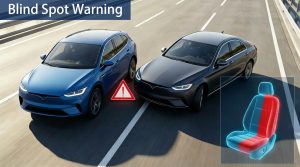
Application of Kepo’s Haptic Feedback Series in Touch Panels and Buttons,Kepo’s haptic feedback products are applied to touch panels and buttons. When touched, the technology provides operators with force and tactile feedback. Vibration feedback can utilize different waveforms to achieve various tactile effects, offering a richer, more detailed, and immersive haptic feedback experience. This technology enhances driving safety and user experience by reducing driver distraction due to accidental touches, thereby improving operational control within the vehicle. In this way, it reshapes the user experience and offers more solution options for smart cabins.
Future Development Directions
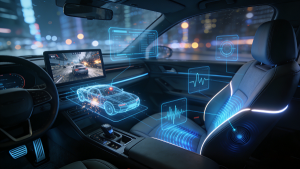
With the advancement of artificial intelligence and 5G technology, the application of touch modules in automobiles will become more intelligent and diverse. Future touch screens will not only serve as windows for human-machine interaction but will also deeply integrate with in-vehicle systems to achieve more automated and intelligent functions. For example, by combining touch screens with voice assistants, users can operate the vehicle more conveniently while maintaining safe driving.