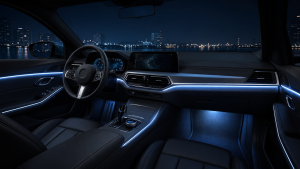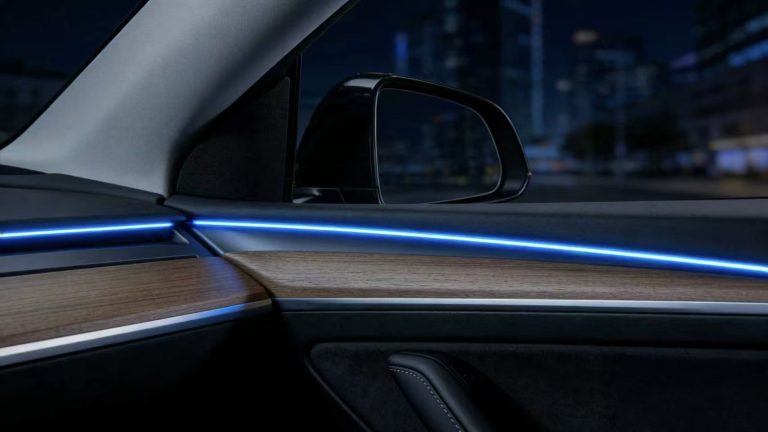
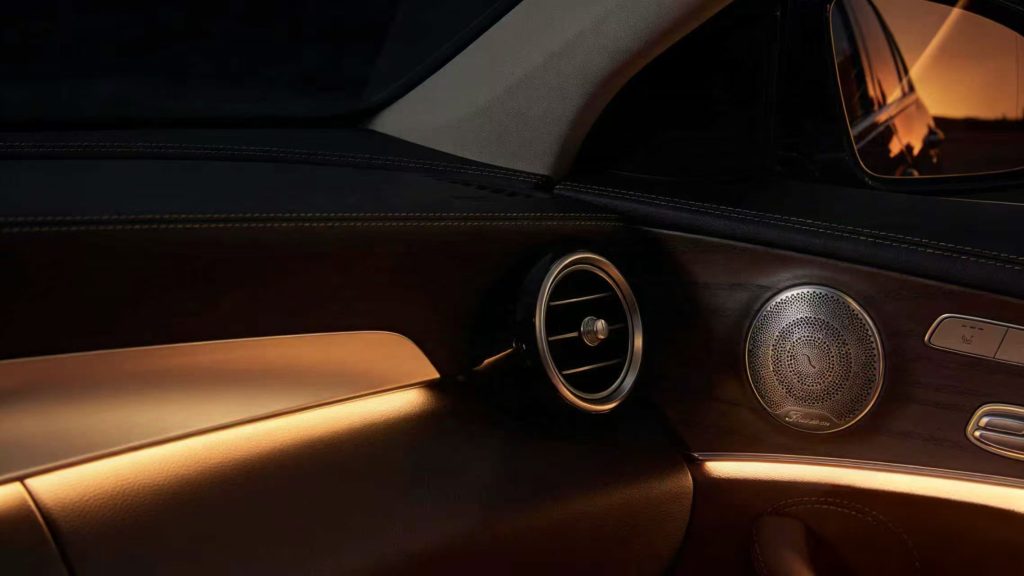
À l'intérieur d'une voiture, vous pouvez souvent observer différentes qualités de lumière: certains rayons sont nets et clairs, d'autres doux et même, et certains semblent émaner de l'intérieur du véhicule lui-même. La raison derrière cela réside dans les différentes méthodes d'éclairage de l'éclairage ambiant : direct, indirect (réfléchissant), et éclairage transmis.
Éclairage direct — La lumière est guidée à travers des matériaux guides de lumière et diffusée via des points de diffusion de surface ou des microstructures pour émettre un éclairage.. L'éclairage d'ambiance direct se caractérise par sa simplicité, haute luminosité, et des couleurs vibrantes. Cependant, contrôler l'uniformité du guide de lumière est crucial pour éviter des problèmes tels que “brillant en tête, sombre à la queue.”
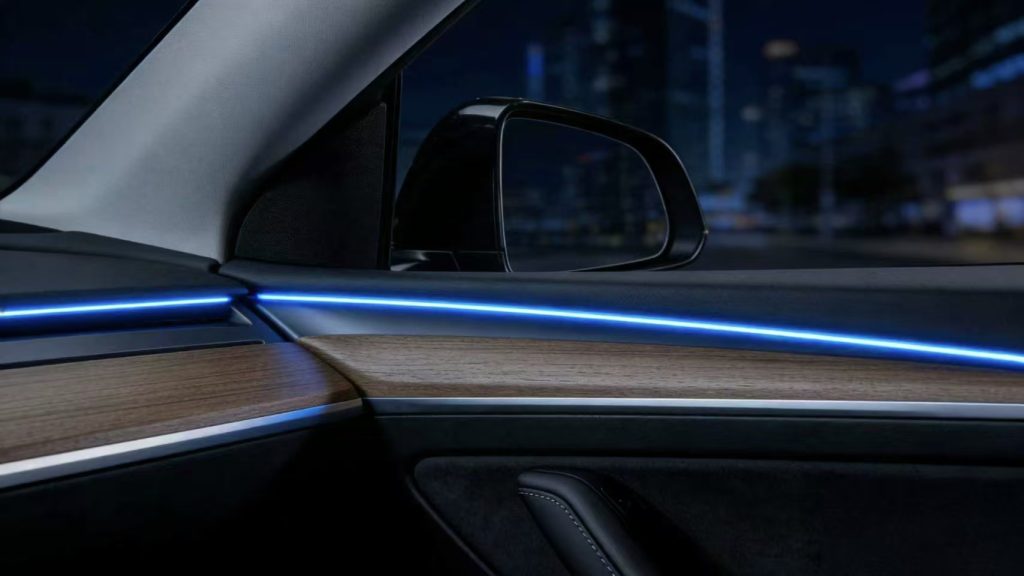
Indirect (Réfléchissant) Éclairage — La lumière est dirigée sur une surface réfléchissante, où il subit une réflexion diffuse pour éclairer indirectement et uniformément la zone cible. L'éclairage indirect offre une douceur, éclairage uniforme sans éblouissement, créer un effet de lumière indirecte. Il impose des exigences plus élevées au matériau de surface de la zone réfléchissante.
Éclairage transmis — La lumière brille derrière un film translucide, passant uniquement à travers des micro-perforations ou des motifs précisément conçus. L'éclairage ambiant transmis permet des affichages à motifs ou de marque précis avec un fort impact visuel. Il nécessite des matériaux translucides de haute qualité pour garantir une clarté suffisante.
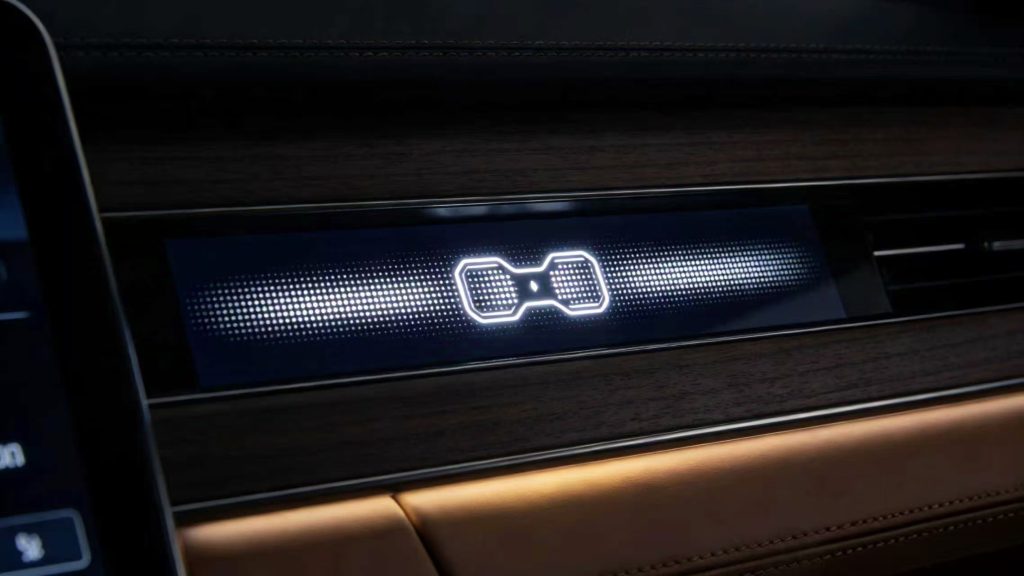
Dans la solution d’éclairage d’ambiance automobile de Kepo, nous utilisons des guides de lumière directe pour définir des contours nets, lignes technologiques sur la garniture du tableau de bord; utiliser un éclairage réfléchissant pour créer un effet uniforme, doux, et lueur immersive au plafond; et exploitez la technologie transmissive pour obtenir des affichages précis du motif de marque sur des composants intérieurs spécifiques.
C'est précisément grâce à cette application flexible de multiples méthodes d'éclairage que Kepo élève l'éclairage ambiant d'une fonction de base à un outil crucial pour façonner une identité de marque unique., finalement créer un harmonieux, prime, et un environnement lumineux global expressif pour nos clients.