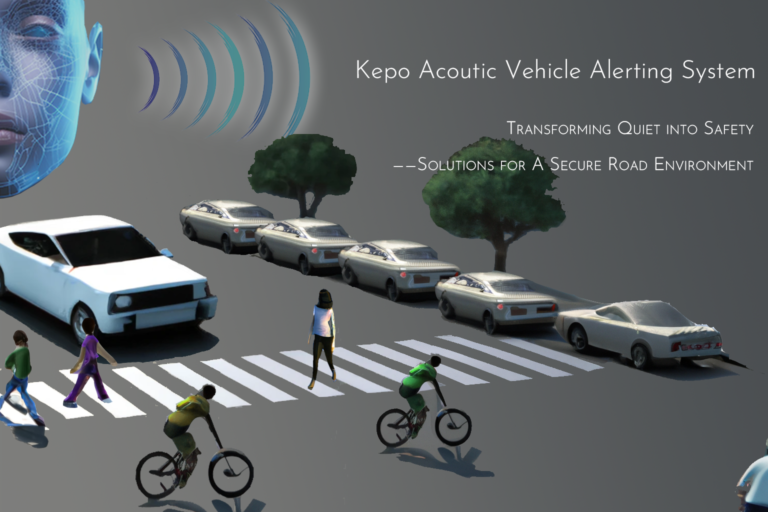
With the evolution of the automotive industry, electric vehicles (EVs) are becoming increasingly prevalent in the market. As a result, the noise generated during their operation has significantly decreased. This creates potential safety risks, as pedestrians and visually impaired individuals may find it challenging to detect an approaching vehicle at low speeds. To address this issue, regulations in various countries mandate that EVs be equipped with an Acoustic Vehicle Alerting System (AVAS), which emits artificially designed sounds to alert pedestrians and other road users when the vehicle is traveling at low speeds. This blog explores the critical factors considered by Kepo in designing AVAS.
Safety
The primary consideration in AVAS development is to enhance driving and road safety. The sound design needs to capture pedestrians’ attention effectively, ensuring it is audible in different noise environments, such as bustling cities or quiet rural areas. Engineers must meticulously adjust the sound source’s frequency and volume to achieve optimal effectiveness in various contexts.
Sound Recognition
The warning sounds emitted by AVAS must not only be heard by pedestrians but also be highly recognizable. Passersby should be able to distinguish that the sound is coming from an electric vehicle. Engineers can achieve this through specific sound characteristics and frequencies.
Regulatory Requirements
Different countries and regions have varying requirements for AVAS sounds. Designers need to fully understand and comply with these regulations to ensure the sound design meets local legal standards. For instance, EU regulations require EVs to emit sounds simulating internal combustion engines at speeds below 20 km/h, while the U.S. mandates AVAS activation below 30 km/h. Therefore, sound design must be adjusted according to the target market to ensure compliance.
User Driving Experience
AVAS sounds not only alert pedestrians but can also impact the vehicle’s occupants. Engineers must ensure that the alert sounds heard by those inside the vehicle enhance safety and improve the interaction between the vehicle and its occupants.
Unique Brand Identification
A unique sound design can enhance brand recognition. For example, Tesla’s AVAS sound emphasizes a sense of technology and futurism, while Porsche’s design aims to convey high performance and a passion for driving. Combining AVAS sound design with brand characteristics strengthens users’ brand identification.
AVAS sound design is a complex and meticulous process that requires consideration of safety, recognizability, brand image, user experience, regulatory compliance, and environmental adaptability. As technology advances, Kepo aims to create more intelligent and personalized AVAS sound designs, ensuring safer future mobility for electric vehicles.