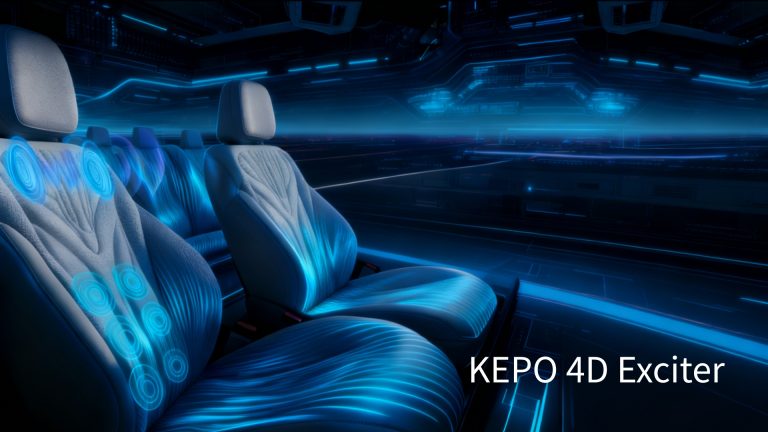
While current DMS can accurately perceive the driver’s state, it often encounters bottlenecks in the interaction phase. Visual prompts are easily overlooked, and auditory alarms can be intrusive. From a product perspective, the value of a seat vibration system lies in providing DMS with a system-level, highly perceptible, and low-interference interactive solution.
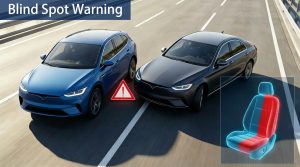
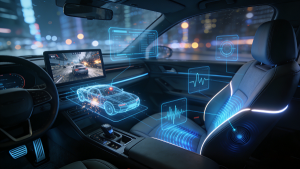
Our core logic is to make vibration a precise haptic language. It is not simply a “buzz,” but rather a tactile output intelligently arbitrated based on fused data from DMS and ADAS. When the system detects mild distraction, a gentle pulse feels like a tap on the shoulder; during a lane departure, vibration occurs precisely on the corresponding side of the seat, providing intuitive spatial guidance; and in the face of a forward collision risk or severe fatigue, high-intensity, full-back vibration achieves an effective “haptic wake-up.”
Realising that this experience relies on three key technologies: distributed vibration array hardware provides the physical foundation for accurate localisation; multi-modal data fusion algorithms serve as the “brain,” determining feedback strategies; and a meticulously calibrated “haptic vocabulary” ensures the interaction is intuitive and comfortable, thereby avoiding user annoyance.
Safety is the cornerstone of this system, but not its entirety. While completing the safety closed loop with DMS, this system also naturally becomes the haptic port of the cabin. It can switch to a 4D audio-visual entertainment mode in safe scenarios, providing an immersive experience and ultimately becoming a new dimension for shaping brand differentiation.
Our goal is to evolve haptic interaction from a mere function into an intelligent language that communicates seamlessly with the user.